
Subscribe

Home Page Secondary Menu

  • Blogs
  • Careers
  • Events
  • Media
  • Newsletter
  • Resources
  • Donate
3ie
  • About us

    About us

    We are a mission-driven non-profit organization dedicated to using evidence to transform people’s lives. We collaborate with governments, foundations, NGOs, development and research organizations across the globe.

    Explore About us
    • Team
    • Supporters
    • Members
    • At a glance
    • Governance
    • Partners
    • Institutional policies and reports
    • Contact us
  • What we offer

    What we offer

    We support governments and development partners to generate and use rigorous evidence that informs better policies, programs and investments. Our work spans the full decision-making cycle, helping identify what works, why it works, and how to improve outcomes.

    Explore What we offer
    • Theory of change development
    • Impact evaluation
    • Evidence Synthesis
    • Evidence gap maps
    • Impact evaluations scoping and design
    • Training Initiatives
    • Research grants administration
    • Transparency, research and ethics helpdesk
  • Our work

    Our work

    Our diverse evidence to policy portfolio spans all major development sectors and regions and represents the scale and depth of 3ie’s global programs and initiatives.

    Explore Our work
    • Education
    • Peacebuilding
    • Food Systems and Nutrition Evidence and Gap map
    • Gender and women’s empowerment
    • Mitigating and adapting to climate change
    • Innovations in data for impact evaluation
    • Research Commissioning Centre
    • WACIE
    • Rural India Livelihoods Project
    • Global Evidence Commitment: Advancing Use of Rigorous Evidence
  • Evidence Hub

    Evidence Hub

    We make high-quality development evidence publicly accessible through key databases, journals and repositories, which include studies produced by 3ie and beyond.

    Explore Evidence Hub
    • Development Evidence Portal
    • Evidence gap maps
    • Evidence impact summaries
    • Impact Stories Dashboard
    • Journal of Development Effectiveness
    • Publications

Impact

  • Impact
  • About us

    About us

    We are a mission-driven non-profit organization dedicated to using evidence to transform people’s lives. We collaborate with governments, foundations, NGOs, development and research organizations across the globe.

    Explore About us
    • Team
    • Supporters
    • Members
    • At a glance
    • Governance
    • Partners
    • Institutional policies and reports
    • Contact us
  • What we offer

    What we offer

    We support governments and development partners to generate and use rigorous evidence that informs better policies, programs and investments. Our work spans the full decision-making cycle, helping identify what works, why it works, and how to improve outcomes.

    Explore What we offer
    • Theory of change development
    • Impact evaluation
    • Evidence Synthesis
    • Evidence gap maps
    • Impact evaluations scoping and design
    • Training Initiatives
    • Research grants administration
    • Transparency, research and ethics helpdesk
  • Our work

    Our work

    Our diverse evidence to policy portfolio spans all major development sectors and regions and represents the scale and depth of 3ie’s global programs and initiatives.

    Explore Our work
    • Education
    • Peacebuilding
    • Food Systems and Nutrition Evidence and Gap map
    • Gender and women’s empowerment
    • Mitigating and adapting to climate change
    • Innovations in data for impact evaluation
    • Research Commissioning Centre
    • WACIE
    • Rural India Livelihoods Project
    • Global Evidence Commitment: Advancing Use of Rigorous Evidence
  • Evidence Hub

    Evidence Hub

    We make high-quality development evidence publicly accessible through key databases, journals and repositories, which include studies produced by 3ie and beyond.

    Explore Evidence Hub
    • Development Evidence Portal
    • Evidence gap maps
    • Evidence impact summaries
    • Impact Stories Dashboard
    • Journal of Development Effectiveness
    • Publications

Impact

  • Impact

Home Page Secondary Menu

  • Blogs
  • Careers
  • Events
  • Media
  • Newsletter
  • Resources
  • Donate

Breadcrumb

  1. Home
  2. Evidence hub
  3. Evidence impact summaries
  4. Informing the global evidence base on food security and nutrition

Informing the global evidence base on food security and nutrition


About 3ie evidence impact summaries

Read how 3ie verifies and classifies evidence impact

Highlights

Evidence impact

  • 3ie’s living evidence and gap map (E&GM) is featured on the European Commission’s Knowledge4Policy (K4P) portal, which highlights two recommendations for policymakers based on the results.
  • 3ie's living E&GM is cited in a 2021 UN Food Systems Summit brief. The summit’s scientific group prepared the review as a brief, which informed the recommendations and commitments emerging from the summit.
  • The Norwegian Agency for Development Cooperation (Norad) commissioned 3ie to carry out a rapid evidence assessment on the long-term outcomes of food systems interventions.

Factors that contributed to impact 

  • The research team ensured strong buy-in by cultivating relationships and regular engagement with key stakeholders in the food security and nutrition sector.
  • The researchers were effective knowledge translators and disseminated evaluation findings through a variety of knowledge products.  

Evidence gap map details

Title: The effects of food systems interventions on food security and nutrition outcom…
Authors: Nick Moore, Charlotte Lane, Ingunn Storhaug, Amber Franich, Heike Rolker, Josh Furgeson, Thalia Sparling, and Birte Snilstveit
Status : Completed 2021
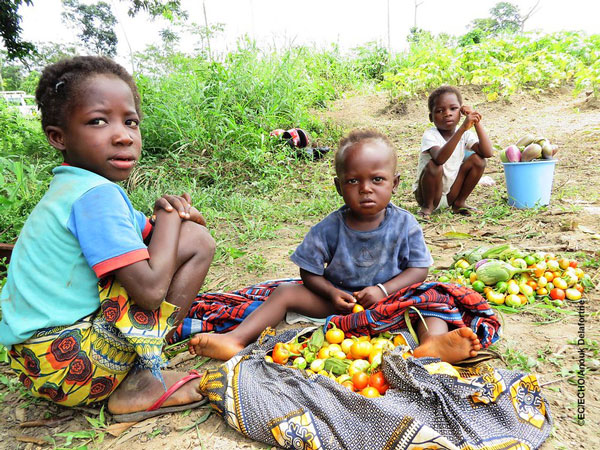
for illustrative purpose only

Context

In the last few years, significant efforts have been made to improve food systems for better food security and nutrition outcomes. As a result, there is a vast amount of evidence demonstrating what works; however, complications in navigating this research make it difficult for decision-makers to use. 

3ie, with support from Innovative Methods and Metrics for Agriculture and Nutrition Actions (IMMANA), has been commissioned by BMZ through GIZ’s Knowledge for Nutrition program to continuously monitor the available evidence and regularly add studies to ensure that the E&GM remains a useful and current tool. 3ie's first living evidence and gap map (E&GM) includes the largest collection of high-quality research on food systems interventions in low- and middle-income countries.

Evidence

3ie’s largest, living E&GM includes over 2,900 studies. It represents a rich body of evidence in an accessible format.

The EGM has found that several widely implemented interventions are not well-researched, allowing for potentially negative consequences and inefficient use of funds. Larger interventions, which impact more people, are also less frequently studied; most evaluations have taken place at local and subnational levels, with less evidence of national and transnational interventions. We also identified relatively few studies examining interventions that support women’s decision-making or measure the outcomes of women’s empowerment—despite the fact that women are traditionally major actors within food systems.

The literature additionally has a strong focus on randomized trials, with mixed-methods approaches, and those considering cost evidence, severely underrepresented.

Evidence impacts

Type of impact: Inform discussions of policies and programs

When subsequent phases of the evaluated programme or policy draw from the findings of the evaluation or review, and/or the study team participates in informing the design of a subsequent phase.

This is one of 3ie’s seven types of evidence use. Impact types are based on what we find in the monitoring data for an evaluation or review. Due to the nature of evidence-informed decision-making and action, 3ie looks for verifiable contributions that our evidence makes, not attribution.

Read our complete evidence impact typology and verification approach here.

Close window

3ie’s living E&GM featured in the European Commission’s Knowledge4Policy portal

The living E&GM is featured on the European Commission’s Knowledge4Policy (K4P) portal for evidence-based policymaking. The portal highlights two recommendations for policymakers, based on the results presented in the review: (1) Make use of high-quality systematic reviews when designing and developing new policies and programs (A total of 34 high-quality systematic reviews were identified); and (2) Consider investing in under-researched areas (The map identified several intervention-outcome combinations for which there is relatively little impact evaluation evidence). The K4P's goal is to bridge the science-policy gap by delivering policy evidence from scientists to policymakers across Europe. The portal contains "high quality, relevant and scientifically robust evidence'' curated by 19 teams of European Commission scientists.

Type of impact: Inform discussions of policies and programs

When subsequent phases of the evaluated programme or policy draw from the findings of the evaluation or review, and/or the study team participates in informing the design of a subsequent phase.

This is one of 3ie’s seven types of evidence use. Impact types are based on what we find in the monitoring data for an evaluation or review. Due to the nature of evidence-informed decision-making and action, 3ie looks for verifiable contributions that our evidence makes, not attribution.

Read our complete evidence impact typology and verification approach here.

Close window

3ie’s living E&GM cited in a UN Food Systems Summit brief

Ahead of the 2021 UN Food Systems Summit, research partners in the summit’s scientific group (including leading IFPRI researchers) cited 3ie’s E&GM on Food Systems and Nutrition in their review of evidence on gender equality, women's empowerment, and food systems. The group prepared the review as a brief, whose work informed recommendations and commitments that emerged from the summit.

Type of impact: Inform the design of other programs

Where findings from the evaluation or review inform the design of a program(s) other than the one(s) evaluated.

This is one of 3ie’s seven types of evidence use. Impact types are based on what we find in the monitoring data for an evaluation or review. Due to the nature of evidence-informed decision-making and action, 3ie looks for verifiable contributions that our evidence makes, not attribution.

Read our complete evidence impact typology and verification approach here.

Close window

Norad commissioned 3ie to carry out a rapid evidence assessment

Following engagement on the process and findings of 3ie's living E&GM on food systems—and its associated rapid evidence assessments around women's empowerment and fiscal policies for healthy diets—Norad commissioned 3ie to produce a rapid evidence assessment on the long-term outcomes of food systems interventions.

Marc Nolting
Head of Unit
Global Agenda for Food and Nutrition Security, GIZ

Suggested citation

2024. Informing the global evidence base on food security and nutrition (online summary), Evidence Impact Summaries. New Delhi: International Initiative for Impact Evaluation (3ie).

Evidence impact summaries aim to demonstrate and encourage the use of evidence to inform programming and policymaking. These reflect the information available to 3ie at the time of posting. Since several factors influence policymaking, the summaries highlight contributions of evidence rather than endorsing a policy or decision or claiming that it can be attributed solely to evidence. If you have any suggestions or updates to improve this summary, please write to influence@3ieimpact.org

Last updated on 11th June 2024
Print this page Download this page Share this page  

About Footer

  • About

Services Footer

  • What we offer

Our work

  • Our work

Evidence hub

  • Evidence Hub

Donate

  • Donate
 

Copyright © 2026 International Initiative for Impact Evaluation (3ie)| All rights reserved | Terms of use | Privacy policy | Accessibility statement