Aquaculture for Livelihoods, Nutrition and Women’s Empowerment
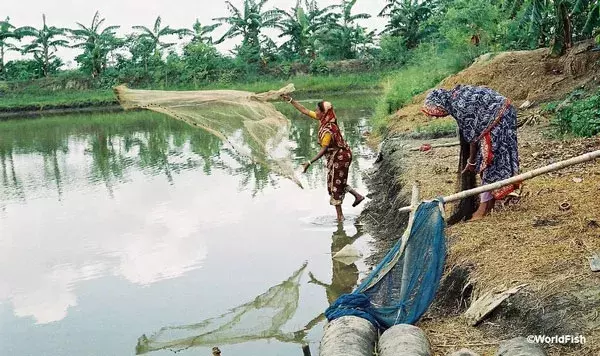
The production and consumption of fish are rising globally. Much of this growth originates from small-scale aquaculture in developing countries. In Bangladesh, production has gone up from 124,000 tons in 1984 to 2.3 million tons in 2022, making the country the fifth-largest aquaculture producer globally (FAO, 2024). By providing low-income and marginalized communities with livelihoods and food, aquaculture has the potential to contribute to multiple SDGs. With the support of the Gates Foundation, 3ie led mixed-methods evaluations and systematic reviews to inform the broader evidence base on aquaculture.


Why impact evaluations matter: Lessons from Bangladesh’s rapidly evolving aquaculture sector
Why impact evaluations matter: Lessons from Bangladesh’s rapidly evolving aquaculture sector Our study finds that productivity and income rose across both project and comparison communities; suggesting that broader sectoral growth, not the intervention itself, was driving results. By walking through the theory of change, this blog helps understand how this happens. The implication is significant: without rigorous evaluation, this project could easily have claimed credit for change that was already underway. Read blog
What do we know about the impacts of aquaculture?
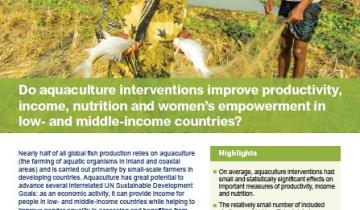
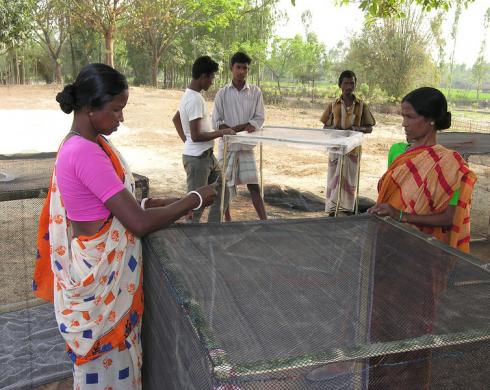
Despite recognition of the potential of aquaculture interventions for international development, there is limited understanding of their effectiveness. To fill this gap, 3ie conducted a systematic search and analysis of studies looking into the effectiveness of aquaculture interventions on four main outcome groups: productivity, income, nutrition, and women’s empowerment.
About the program
In 2019, WorldFish launched the Increasing Income, Diversifying diets and Empowering women in Aquaculture (IDEA) project to harness the aquaculture potential for improved productivity, women’s empowerment and nutrition. The project operates in Bangladesh’s Rajshahi and Rangpur divisions facing high poverty, limited aquaculture development, and persistent undernutrition, especially among women and children.
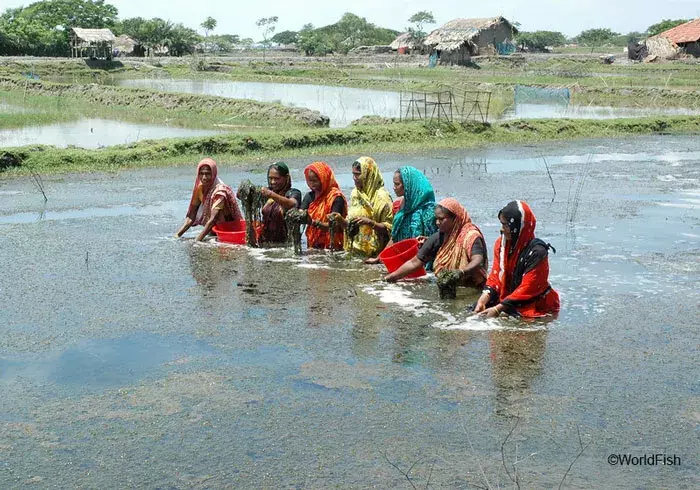
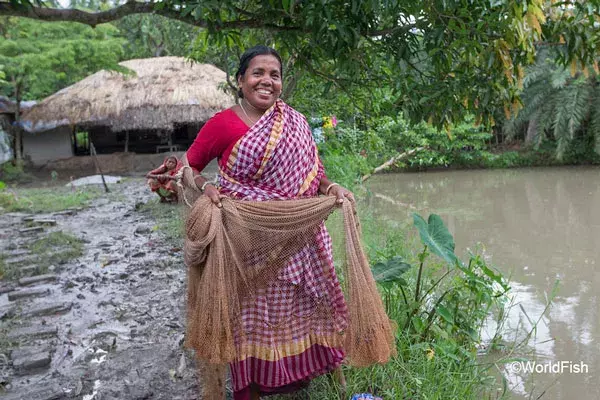
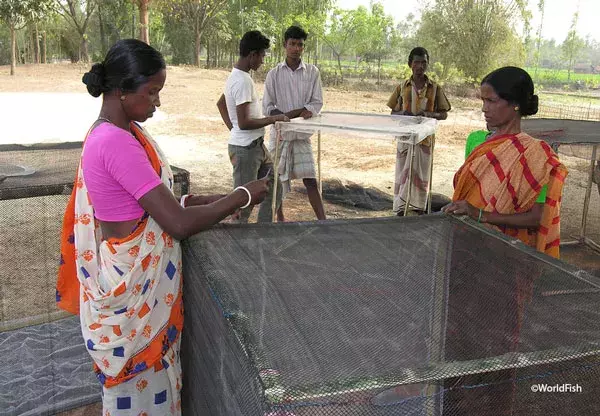
3ie led a mixed-methods evaluation to estimate the impacts of the IDEA project. To situate these findings within the broader evidence base and examine what is known about aquaculture in low-and middle-income countries (L&MICs), we also led systematic reviews of evidence on aquaculture interventions in L&MICs, particularly on women’s empowerment and issues related to gender in the aquaculture value chain. We examined interventions that support smallholder fish farmers, particularly women, to increase productivity and diversity of their aquaculture activities and promote maternal and child nutrition and women’s empowerment.
Evaluation of IDEA: An aquaculture project in Bangladesh
3ie, with colleagues from the University of Greenwich and the Potsdam Institute for Climate Impact Research, led this evaluation using a three-arm randomized design across 551 villages and 3,654 households in Rajshahi and Rangpur divisions.
We found that the IDEA project was implemented in a context of rapid aquaculture growth and commercialization. Productivity and incomes increased sharply across all study arms, indicating that broader market forces rather than the project itself were the primary drivers of change. Shifts in gender attitudes were neither linear nor uniformly progressive. The study observed a mix of progress and backlash, with men’s and women’s views sometimes converging and at other times diverging. Despite strong program intent, nutrition outcomes remained largely unchanged, likely reflecting already high baseline fish consumption and strong existing knowledge in the region. Overall, the findings raise important questions about how to design gender- and nutrition-sensitive aquaculture interventions in rapidly commercialising markets and what it takes to achieve impact beyond existing growth trends.
Read the full evaluation report and the brief
Explore baseline report here
Read our registered evaluation protocol here
Drawing on our evaluation findings, we developed a paper (currently unpublished) on gender norms and norms misperceptions in rural Bangladesh. The analysis shows that progressive and conservative attitudes coexist across different areas of women’s lives, highlighting the complex and uneven nature of social change, where progress and backlash can occur simultaneously.
Read our findings on gender norms in rural Bangladesh
Systematic review update
A new look into aquaculture interventions for improving productivity, income, nutrition and women’s empowerment in low & middle-income countries
The original review conducted in 2021, systematically screened 12,000 records from 27 academic databases and grey literature sources and including 21 impact evaluations covering 13 aquaculture programs in six countries. It found that aquaculture interventions led to small improvements in productivity and income for fish farmers in most contexts. However, the authors stressed on the need for more rigorous measurement of impact, particularly on nutrition and women’s empowerment outcomes.
The review report is published here and you can find an overview of the findings in this brief and this blog.
To strengthen this evidence base, we led an updated systematic review on the effects of aquaculture interventions. The update meta-analyzed 1,417 estimates from 53 impact evaluations of 40 programs. The review largely confirms the original review's findings that aquaculture programs improve production and livelihoods. The updated findings highlight that aquaculture is a safe bet for improving fish farmers' productivity and livelihoods, which works well across contexts and productive systems. It can also support women's empowerment and inclusion, as well as household food security and consumption. However, decision-makers should take further considerations to ensure aquaculture's promise to affect food security and nutrition outcomes is achieved.