
Mapping the Evidence for Seasonal Malaria Chemoprevention
Seasonal Malaria Chemoprevention (SMC) is a cornerstone malaria prevention strategy, protecting millions of children each year. As countries scale and adapt SMC delivery, decision‑makers need clear, reliable evidence on what works, in which contexts, and under what conditions. 3ie has partnered with Malaria Consortium to develop the first SMC evidence gap map (EGM). The EGM will systematically catalogue and visualize existing research on SMC implementation, delivery strategies, and contextual factors, providing an accessible, interactive overview of where evidence is strong and where important gaps remain.

About the project
Decisions about malaria prevention often need to be made quickly, with limited resources and in diverse local contexts. Without a clear overview of existing evidence, programs risk duplication, missed learning opportunities or investments in approaches that may not deliver optimal results. The initiative aims to strengthen evidence-informed decisions on scaling, adapting and optimising SMC programmes — contributing to more effective malaria prevention and improved health outcomes for vulnerable children.
By presenting the evidence in an accessible, interactive format, the map will help policymakers, program implementers, donors and researchers identify where strong evidence already exists and where important knowledge gaps remain.
By bringing together the full body of implementation evidence, the SMC EGM will support more effective, equitable, and scalable program design, guide smarter donor investments, help prioritize future research, and strengthen coordination across partners to reduce the malaria burden.
What the EGM will deliver
The EGM will provide:
- A comprehensive mapping of SMC implementation and delivery studies
- An assessment of the availability and quality of systematic reviews
- An interactive, publicly accessible visual map
- Policy-relevant insights highlighting evidence strengths and gaps
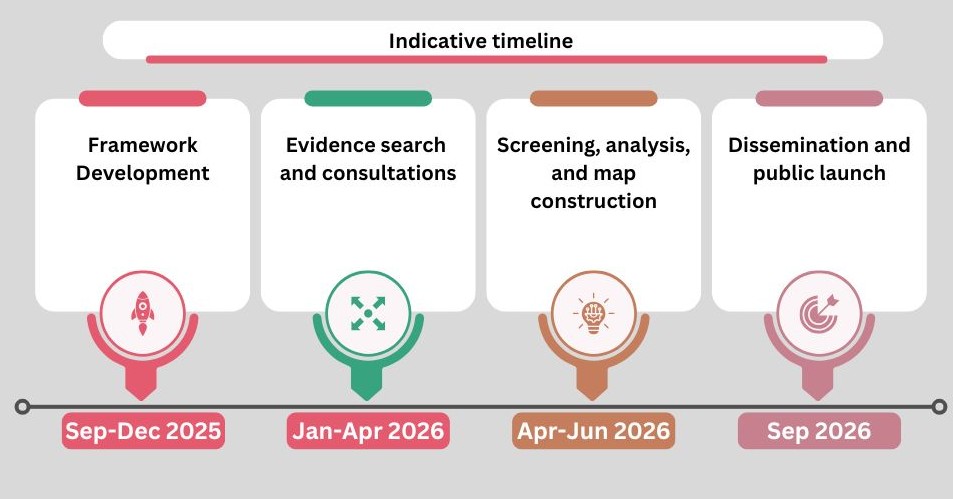
Indicative timeline
 |  |