Agricultural Insurance Evidence Program
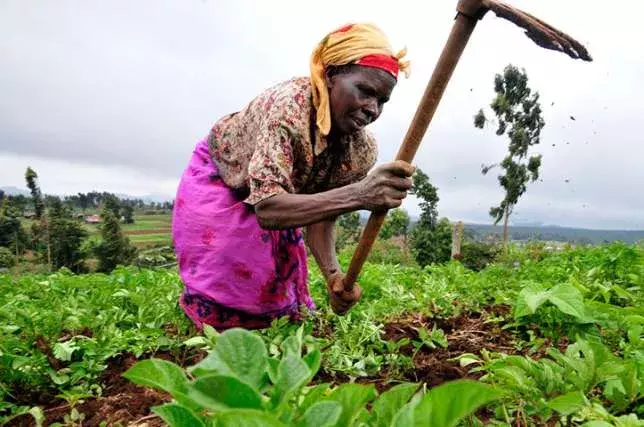
Agriculture is a major source of sustenance for rural populations in low- and lower-middle income countries. But owing to weather, pests, diseases and price fluctuations, farmers face numerous risks, including crop and livestock losses. In recent years, agricultural insurance has gained increased attention as a tool for social protection, providing smallholder farmers and their households with much-needed safety nets by transferring risk to a third party. Despite their widespread adoption, there is a dearth of evidence on whether these insurance products are successful in improving smallholder farmers’ welfare. To close this gap, 3ie is supporting the generation of policy-relevant evidence on factors that affect successful uptake of agricultural insurance among smallholder farmers.
Agricultural risk and mitigation gap map
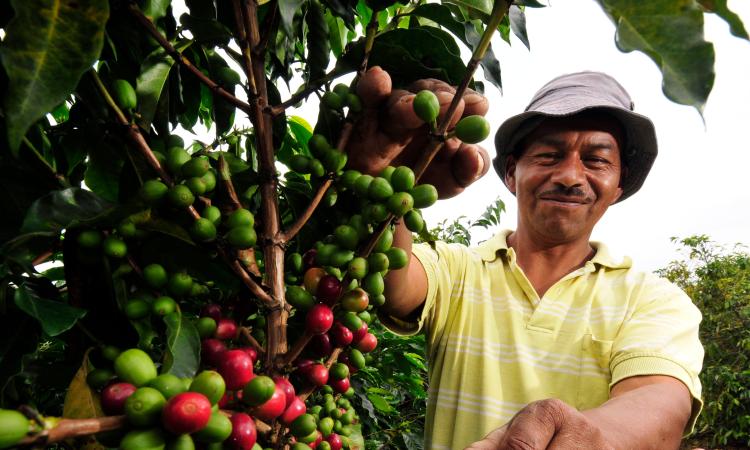
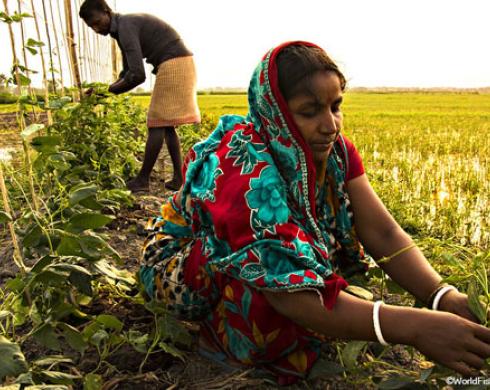
This map presents existing evidence on agricultural insurance interventions that aim to improve smallholder farmers resilience in L&MICs. The map identifies impact evaluations and systematic reviews related to financial agricultural risk mitigation (FARM) in low- and middle-income countries. It takes stock of the evidence base in a way that can inform policy decisions and investments in research. Here is the report and the brief
3ie’s Agricultural Risk Insurance Evidence Program: a structured approach to impact evaluations
This blog provides a brief overview of evaluations supported within the Agricultural Insurance Evidence Program, during both phase I and phase II. It takes us through the findings of formative and process evaluations conducted in phase I, which were helpful in testing implementation feasibility and assessing opportunities and challenges for impact evaluations being undertaken in phase II.

Does agricultural certification improve well-being?
This brief is based on a systematic review that assesses the impact of agriculture certification schemes for improving socially sustainable and fairer production for smallholder farmers and workers. The review finds positive effects on prices and income from the sale of certified products but no change in overall household income and assets or wages for workers. Apart from addressing implementation bottlenecks, producers need more assistance to secure selling contracts, expand access to certified markets, and switch to new and more trading relations.
Background
Many of the world’s estimated 500 million smallholders, who produce around two-thirds of the world’s food supply, remain trapped in poverty. The vast majority of them – especially women – operate on a subsistence basis and suffer from low productivity, weak access to markets, and inability to withstand shocks. Getting new technologies and risk mitigation interventions into the hands of farmers is essential for giving farmers the tools to weather such risks.
The Agricultural Insurance Evidence Program seeks to support impact evaluations which provide robust evidence on technology and risk insurance adoption in different contexts. The program also seeks to increase awareness of what works in delivering technology and risk insurance services to build poor farmers’ productivity, incomes, and resilience to climate change.
The program, which runs until December 2025 and is jointly funded by FCDO (UK) and BMGF, includes both agricultural insurance products and those that bundle insurance with other financial or non-financial products services.
Projects
Project title: Creating informed demand and impacts through innovative and cost-effective extension
Grant holding institute: International Livestock Research Institute
Study design: RCT with household-level randomization
Synopsis: This study examines low-cost, innovative approaches to increase the efficacy of extension services and increase insurance product knowledge and uptake among female pastoralists. The extension services are layered within a poverty graduation program and discount insurance coupons are offered seasonally.
Results: The study found that both extension videos and premium discount coupons improved pastoralists’ knowledge of the Index-Based Livestock Insurance (IBLI) product, but through different mechanisms. The videos increased understanding across all viewers, raising knowledge scores by 8%, while premium discounts increased knowledge by 24% among those who used them likely because purchasing insurance prompted or followed additional information-seeking. However, videos alone did not increase insurance take-up, though they did boost purchase likelihood among those also offered discounts, suggesting that price is the primary barrier, with knowledge becoming more influential once affordability constraints are reduced. Despite these gains in understanding and uptake, the study found no significant evidence that IBLI improved welfare outcomes.
Overall, extension videos emerged as a cost-effective tool for raising product knowledge at scale, while premium subsidies proved powerful, albeit expensive, drivers of deeper product understanding. Effects also persisted beyond the subsidy period, suggesting targeted, time-bound subsidies could help build an informed client base. Ultimately, insurance may not be suitable for all pastoralist communities, but where it is pursued, ensuring clients have clear, accessible information remains essential for enabling effective and informed uptake.
Read IE report | Read IE brief
Project title: Picture-Based crop insurance: evaluating the impacts of using smartphone camera data for claims verification in India
Grant holding institute: International Food Policy Research Institute (IFPRI)
Study design: Mixed-methods RCT with cluster randomization
Synopsis: The goal of this evaluation is to understand whether improved insurance products have an effect on lowering basis risk in agricultural production and increasing technological adoption. The PBI intervention uses a smartphone based app to assess crop damage from images, thus, addressing information asymmetries and cost drivers for both farmers and insurance companies. Additional aims include understanding whether the intervention affects farmer behavior for different types of crops (tomato versus wheat). Tomato farming represents high profitability, high risk investment cropping and is absent from coverage within the national crop insurance scheme (Pradhan Mantri Fasal Bima Yojana).
Results: The intervention led to increases in insurance uptake and renewal, with treated farmers 54 percentage points more likely to enroll and 70 percentage points more likely to renew coverage, particularly among tomato farmers who lack alternative insurance options. Despite this, overall take-up remained low even with fully subsidized premiums, owing to implementation challenges, documentation barriers, limited and delayed payouts, and the time needed to build trust with farmers. Farmers’ perceptions of PBI were positive: most found the product easy to understand, reliable, and high quality, and 78 percent preferred it over other available insurance options. However, while insured farmers were more likely to grow target crops over time, the intervention had no detectable effects on size of cultivated area, input use, productivity, consumption, or most coping and credit outcomes.
The findings suggest that PBI delivers strong gains in insurance demand and perceived value but has limited short-term impacts on broader economic and wellbeing outcomes. Future implementation of PBI could be strengthened by offering smaller, more frequent payouts to make benefits more visible early on, and by strengthening the surrounding digital ecosystem to reduce enrolment frictions and speed of payouts. These changes require supportive public and regulatory investments in digital infrastructure.
Read IE report | Read IE brief
Project title: Bundling weather-index based insurance with loans in Senegal: an evaluation of impacts on insurance take-up and farmers’ well-being
Grant holding institute: Université Gaston Berger
Study design: Propensity score matching at household level
Synopsis: This study contributes to an evidence-informed strategy at the national level in Senegal by examining the impacts of weather-index insurance bundled with agricultural loan products in Senegal. The primary aims include understanding which products are more likely to sustain take-up of insurance and credit, how insurance coverage affects adoption of higher return investment strategies and productivity of smallholder farmers, and how the bundled product influences recovery after a rainfall-related shock.
Results: The evaluation did not find evidence that index insurance led to increased agricultural investments, changes in farming practices, or higher incomes among insured producers overall, regardless of whether insurance was offered voluntarily alongside agricultural loans or as a mandatory bundle. A key factor underlying these null results was limited farmer awareness: many insured producers, particularly those with mandatory coverage, did not know they were insured or misunderstood what the product covered. In contrast, farmers who were aware of their insurance coverage experienced higher net incomes, greater consumption, and higher values of consumed agricultural products, and were able to take out larger agricultural loans, though the number of loan recipients did not increase. These findings suggest that weather index insurance can support smallholder incomes and agricultural development when farmers clearly understand the product offering. However, the evaluation could not assess impacts on resilience following rainfall shocks due to limited transparency and data on payouts, which were often used to offset loan defaults rather than being paid directly to farmers - contributing to skepticism about the product’s reliability among producers.
Read IE report | Read IE brief
Project title: Uptake and evaluation of innovative insurance embedded credit for promoting resilience and livelihoods for smallholder maize and wheat farmers in Kenya
Grant holding institute: International Food Policy Research Institute (IFPRI)
Study design: RCT with household-level randomization
Synopsis: This study evaluates an innovative, market-based credit solution that embeds within its structure an insurance contract, called Risk Contingent Credit (RCC), for maize farmers in Kenya. It eliminates the need for borrowers to provide collateral as a condition for accessing credit, which reduces barriers to accessing credit while increasing financial inclusivity.
Results: The study found that relative to traditional credit, risk-contingent credit (RCC) showed consistently higher and statistically significant effects on key investment indicators such as the adoption of chemical fertilizers, fertilizer spending, and use of improved seed varieties. By reducing the risk of default for smallholder borrowers, bundling insurance with credit can unlock greater access to finance, supporting farm growth and building resilience in agricultural systems facing climate-related stresses. Overall, RCC
demonstrates strong potential for improving farm investment, productivity, and wellbeing, though further evaluation is needed to understand how impacts may vary across contexts.
Policies promoting access to improved inputs, such as seeds and fertilizers, should consider facilitating credit provision, ideally with insurance to protect against risks like drought. Insurance markets can protect household collateral and reduce lenders’ financial risk, enabling safer and more affordable loans. Providers should ensure transparency and effective communication with farmers, for example by delivering continuous index updates through simplified visual tools and leveraging digital technologies such as mobile phones. Such strategies can help scale insurance-linked credit products, enhance smallholder productivity, and strengthen resilience in vulnerable agricultural systems.
Read IE report | Read IE brief
Project title: Khetscore: a cluster randomized trial on the impacts of using digital technologies to unlock risk contingent credit for marginal farmers in Odisha
Grant holding institute: International Food Policy Research Institute
Study design: Mixed methods RCT with cluster randomization
Synopsis: This study evaluates the impacts of a digital risk-contingent credit product targeted to small and marginal farmers in Odisha, India. Satellite imagery and georeferenced photos of crops are used to rate loan applications, monitor disbursed loans, and insure farmers’ loans for damage to crops using a novel methodology, KhetScore. The study will examine whether a microfinance institution can cost-effectively rely on KhetScore-based credit scores and in-person visits and whether this approach improves farmers’ access to agriculture credit and insurance.
Results: The KhetScore credit scoring methodology demonstrated substantial positive impacts on smallholder farmers by reducing transaction costs, overcoming documentation barriers, and enabling access to both credit and crop insurance. Farmers in the treatment group were more likely to purchase and renew insurance, with particularly strong effects for women, and were more likely to take formal loans without substituting informal borrowing. These loans came with favorable terms, as evidenced by a marked reduction in repayment difficulties among treated households. The intervention also generated agricultural benefits: higher revenues during the monsoon (kharif) season, lower production costs and expanded cultivated area during the dry (rabi) season, and overall higher profits across both seasons.
Beyond financial and agricultural outcomes, the KhetScore program had notable gender and wellbeing effects. Women in treated households reported greater participation in decisions around borrowing, income use, and livelihoods, alongside reduced stress levels for co-signing female borrowers. The findings suggest strong policy relevance for scaling KhetScore in regions like Odisha, where sharecroppers and tenant farmers face limited access to formal financial services. The credit scoring methodology’s ability to reduce paperwork requirements and bundle credit with insurance could expand inclusive rural finance, support risk mitigation, and promote women’s empowerment. Future research is needed to examine the separate contributions of credit and insurance, especially under adverse weather conditions, to fully understand the transformative potential of this bundled financial solution.
Read IE report | Read IE brief
Project title: Enhancing access to index-based weather agricultural insurance in Burkina Faso - A new marketing approach
Grant-holding institute: Innovations for Poverty Action
Study design: Process Evaluation
Synopsis: This study originally sought to understand the viability of a new insurance marketing and outreach scheme focused on urban areas, and whether urban migrant relatives influence their rural family members' knowledge and uptake of insurance and, ultimately, decision-making capabilities. However, when attempting implementation, uptake rates fell 20 points compared to the pilot study. Given this significant drop, the study evolved to a process evaluation to analyze the factors that contributed to the drastic decline in uptake rates and identify areas for improvement to optimize access to this insurance.
Synthesis
Agricultural insurance is a vital tool for smallholder farmers to mitigate risks such as weather variability, crop failures, and price volatility, which threaten their livelihoods. Smallholder farmers, who constitute the backbone of agricultural production in low- and middle-income countries, face heightened risks from climate change. These risks, including increased frequency and severity of droughts, floods, and pest outbreaks, exacerbate farmers’ vulnerability and jeopardize food security. Agricultural insurance has the potential to help manage these risks by providing financial protection and enabling farmers to recover from shocks. However, while there is a growing body of literature on the role of agricultural insurance in enhancing agricultural productivity and climate resilience, its impact on broader well-being outcomes, such as food security, income stability, and gender equity, remains less understood. Our forthcoming paper uses a narrative synthesis approach to analyze results from five impact evaluations conducted under this Program.